4. The Role and Function of Education
4.1 My educational journey.
I consider myself reasonably qualified to share my views on education in township public schools in South Africa, drawing on my personal experience in school and schooling. I started schooling at St. Theresa’s Primary School in Queenstown in 1960. It was a Roman Catholic School, and my journey began in the nursery section. At the time, my mother had to reapply for a teaching post every time she gave birth, and she mostly found employment away from home. Starting me in kindergarten meant that I enjoyed the care of a young spinster, who was my mother’s closest friend. I progressed to Sub A. (Substandard A) the next year. My parents, both being teachers, as the firstborn, I was destined for great things. At the age of twelve, I was put on a train to Uitenhage, where I started Standard 6 (grade 8) at Uitenhage High School in 1968. Uitenhage High, being one of the best schools for coloureds in the Eastern Cape at the time, was to pave my way to medical school after matric. Much to the disappointment of my parents, I was reluctant to return to Uitenhage in 1971 and matriculated from Maria Louw High School in 1972. My dream was to become an auto-electrician, and my father assisted me in applying to Ford and General Motors in Port Elizabeth for the following year. However, he also encouraged me to apply to Dower Teachers’ Training College. The idea was that it would be easy for me to move from Uitenhage to Port Elizabeth should my application to either of the factories be unsuccessful.
In retrospect, this was a wise decision because around June 1973, I was informed by both factories that they were not admitting people of colour for what I wished to do at that stage. However, by that time, I was enjoying Dower College and processed the news with little regret. Teaching became my passion. In my second year, I was elected president of the college SRC, and when the college moved to new premises in Port Elizabeth, I was re-elected president in 1975. These positions exposed me to the political side of education.
I started teaching at Mary Waters High School in Grahamstown in 1976 and immediately became heavily involved in sports administration because I specialised in Physical Education. Unavoidably, I became involved in politics due to my support for SACOS[1] and the general psyche that gave rise to the Soweto Uprising that year.
If I add the years that I spent on school benches, my teacher training in college as well as the years I served as a teacher as experience in education, it amounts to 63 years. By 1967, I had spent 7 years in primary school, another 5 years in high school and 3 years at college. This amounts to 15 years in school as a learner. By the time I retired in 2017, I had taught for 41 years. After my retirement from active teaching in 2017, I became a part-time lecturer in the Education Department at Rhodes University in Grahamstown until 2021. This adds another 4 years of experience in education. In 2022, I started assisting the Sun City Nursery school as an administrative assistant, implying that by 2024, I would have been involved in education for 63 years. I had travelled full circle, starting at preschool, and currently assisting at a preschool. All my tertiary endeavours were also related to education, and I am sharing my thoughts based on first-hand experience in the field.
I feel like Ulysses, and I believe that,
“I am a part of all that I have met; Yet all experience is an arch wherethro’ Gleams that untravell’d world whose margin fades For ever and forever when I move.” (Tennysen)
It took me quite a while to share my idea of what could assist education in South African public mainstream schools, out of fear that it might be shot down by knowledgeable others without thorough consideration. It is my conviction that a lot of the current problems in our country would be greatly addressed if we shifted our worldview.
4.2 Function of Education
I have earlier alluded to a possible function for education when I spoke of the functionalist view where “the family is dependent upon the school to help children grow up to have good jobs so that they can raise and support their own families”. (see 3.1 above) I have also tried to suggest that “Unfortunately, our social reality displays individuals of different means and abilities who have emerged from an era where racial differences were accentuated to a point where it became synonymous with wealth and geographical location”. (3.1 above)
It is commonplace that one of the first areas any new government changes when it comes to power is its Education System and this was no different in the case of South Africa. When the Nationalist Party came to power in 1948, Christian National Education (CNE) was entrenched as an educational system that would realise its social and political ideals.
This influence is adequately covered in a research document by Jane Hofmeyer, where in her abstract she explained that her,
“…project investigates the nature of C.N.E. by tracing the development of the C.N.E. movement from its origins to the publication of its official policy statement in 1948. This historical overview highlights the fundamental shift in the movement from a religious to a more secular and national outlook, as C.N.E. became associated more closely with Afrikaner Nationalism and the National Party Government.” (Hofmeyr, 2015)
When South Africa became a democracy in 1994, immediate plans were set in motion to change the educational landscape that was synonymous with the hardships endured by non-white South Africans. According to Jansen and Taylor,
“The new South African state has achieved a number of notable successes in the post-1994 period. First, the creation of a single national department of education out of 19 racially, ethnically, and regionally divided “departments of education” was a very significant accomplishment in the early years. The creation of non-discriminatory school environments into which access was gained on the basis of criteria other than race or religion was also a very significant achievement of the new government.” (Taylor, 2003)
Besides structural and institutional reform in South Africa, curriculum change was of vital importance. According to Jenny Joshua, “ After the 1994 elections, many people thought we needed a new curriculum – one that developed citizens who had a high level of skills, a high level of knowledge and the attitudes and values that were needed to rebuild our country.” (Joshua, 2003)
One could concur with Jansen and Taylor that the South African government had achieved several successes after 1994, and one can also argue that DOE’s intentions indeed were good if one looks at the principles that guided the South African Government’s curricular changes since C2005 until now. The way we give expression to our societal model has not changed much over the years, and if any of the stakeholders in the cycle underperform or become dysfunctional, the whole system is compromised. In my opinion, however, many of the problems our country faces do not lie in the optimisation of a functionalist model but rather in our perception of education.
The word “education” in our country can in many instances, be substituted with the words “schools” or “schooling” and still make perfect sense in our understanding. We have come to accept that education is acquired through schools and resolved that ‘better” schools produce “better” education. It would probably not be wrong to present our collective interpretation of education as follows:
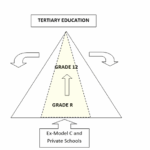
Figure 2: The Road to Success
Figure 2 is based on the perception that there is a perceived ONE main road to success. This notion appears to be supported by many parents in the country. They wish their children to pursue a degree of some sort, and the road to that degree runs through school, and the better the school, the better the chances of success. This mindset conceives imperatives to build more mainstream schools in the various towns and cities in our country as well as improving existing mainstream schools to realise the purpose of the CURRICULUM AND ASSESSMENT POLICY STATEMENT (CAPS). The purpose is to equip:
“Learners, irrespective of their socio-economic background, race, gender, physical ability or intellectual ability, with the knowledge, skills and values necessary for self-fulfillment, and meaningful participation in society as citizens of a free country” as well as “facilitating the transition of learners from education institutions to the workplace; and providing employers with a sufficient profile of a learner’s competences.” (Emphasis mine) https://tinyurl.com/2y364dz2 (p4 b.)
The impact of society on public schools is well researched, and all I wish to add at this stage is Mays’ quotation, “He who starts behind in the great race of life must forever remain behind or run faster than the man in front.” Benjamin E. Mays (Mays) A simple drive through our townships will evidence where our children currently are in the great race of life. It will also give you a good idea of how hard they will have to train to run ‘twice as fast’, given the resources at their disposal.
This model also suggests that the number of learners who reach Grade 12 is considerably lower than the number that enter school at the lower levels and that relatively fewer learners can enter tertiary education despite the efforts of dedicated teachers and institutions that seek to improve matric results.
I am of the view that what is expected from education cannot be adequately addressed by following our current model, which I have labelled “The Road to Success”. The model we have adopted is based on the traditional role education played in a Western or European setting. It has a rigid form based on ‘steps to follow’ to reach what is considered the ‘top’. Our children have to climb a set of predetermined stairs that are managed by our country’s mainstream public schools in the main.
Our educational reforms, studies, pedagogies or improvements are mostly confined to mainstream schools. We explore new ideas and invest a lot of capital in the improvement of our public schools in order to create places of learning that can favourably compare to ex-model C schools. It is an open secret that ex-model C and private schools are considered to be better than township public schools, and parents are prepared to go to great lengths to enrol their children at these schools.
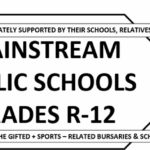
Figure 3: Another way of looking at our current system.
Figure 3 is based on another way of looking at what appears to be our current educational model. It suggests that the main route to success is through mainstream public schools. Every year, a huge number of children are assembled at the entrance of the schooling system, hoping to reach the exit after 12 years to join the world of work. The figure also suggests that there are primarily two distinct groups whose exit after public school is almost guaranteed. They appear in the arrow representing extremely self-motivated learners, learners who have a healthy support system behind them, like an ex-Model C school or a public school where a fertile environment is created by the role-players themselves.
The other arrow refers to what I very loosely term the fortunates. In this group, I include those ‘gifted’ individuals who will excel at any public mainstream school they are enrolled at. They are the ones who can secure bursaries and scholarships. It also includes those children whose parents or support systems can afford the school fees charged at some ex-Model C schools. I also include the group who are excellent at sports because many elite schools in the country headhunt these children.
This model is primarily based on the idea that our main objective in mainstream public schools is to pass matric. The number of bachelor’s passes of a school is used as a yardstick to measure the quality of learning and teaching at a school, and we have been using this criterion for as long as I can remember. In 2020, Sheniel wrote,
“A recent international survey found that more than three-quarters of children aged nine cannot read for meaning. In some provinces, this is as high as 91% in Limpopo and 85% in the Eastern Cape. And of 100 learners that start school, 50-60 will make it to matric, 40-50 will pass matric, and only 14 will go to university.” https://tinyurl.com/ycehmrw4
Compare the results of 2020 with what the Minister of Basic Education, Ms. Siviwe Gwarube, said on the release of the 2024 National Senior Certificate Results on 13 Jan 2025,
“615 429 learners passed the National Senior Certificate – more than any other time in our history. South Africa’s national pass rate for the 2024 National Senior Certificate has therefore increased from 82.9% in 2023 to 87.3%. This is the highest matric pass rate in the history of our country and should be a moment of great pride and celebration for all of us”. https://tinyurl.com/22ne9zdw
This clearly shows a remarkable improvement, and the hard work of all the role players in education in South Africa deserves credit. However, these statistics also serve to highlight our emphasis on Grade 12 in the public mainstream domain and the high premium we place on bachelor’s passes in particular.
However, an article in I O L dated Monday, April 21, 2025, advises that we need to be cautious when comparing the results of 2024 with previous years,
“The matric class of 2024’s record-breaking pass percentage of 87.3% is a source of national pride; however, education experts have warned against making facile comparisons to past years. Over the last five years, matric pass rates have steadily increased, with 2023 posting an 82.9% pass rate and 2022 at 80.1%”
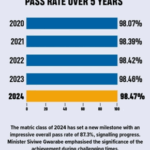
On the surface, it appears that we are slowly but surely having not only more, but also better grade 12 passes over the years. This is commendable, but the main question should be, are we meeting the objectives as set out in the CAPS document?
4.3 Are we meeting our objectives?
4.3.1 It is not an easy answer
Shenilla Mohamed, Executive Director of Amnesty International South Africa, in 2022, said,
“While the report acknowledges that there has been progress made since the end of apartheid on widening access to education as well as other aspects, it has identified weaknesses by the Department of Basic Education, such as repeatedly failing to reach its own targets with respect to infrastructure and facilities” (Shenilla Mohamed, Executive Director of Amnesty International South Africa) https://tinyurl.com/ycehmrw4
To evaluate successes in the education field in South Africa, we need to look at the imperatives set out in our National Curriculum Statement. The opening statement of the General Aims of the South African CAPS reads as follows:
“1.3 General aims of the CAPS South African Curriculum
- The National Curriculum Statement Grades R-12 gives expression to the knowledge, skills and values worth learning in South African schools. This curriculum aims to ensure that children acquire and apply knowledge and skills in ways that are meaningful to their own lives. In this regard, the curriculum promotes knowledge in local contexts, while being sensitive to global imperatives.” ( https://tinyurl.com/28wt6djk)
These curricular expectations are referent to Grades R-12 and could be read in the context of what is presented in Figure 2 above. We cannot ignore the groundbreaking work that has been done in improving the results of mostly mainstream schools, as well as the efforts to improve teaching methodologies so that more meaningful learning can be achieved in our schools. Despite these successes, there are still many critics whose criticism is generally directed at the public mainstream school system. This creates the illusion that if all schools could perform like ex-Model C schools, our results would increase drastically. I call this an illusion because upgrading our township public mainstream schools to an ex-Model C school level will not happen soon enough. Our efforts to improve matric results might be attainable in the medium term, but that is not what is required in terms of the general aims we have identified in our national curriculum.
We will still be faced with high unemployment, and above all, we will not be able to create the kind of citizen we require to build a more functional society.
For as long as we use mainstream public schools as a conduit to achieve our curricular objectives, the longer it will take to create a better life for all.
It would be interesting to determine the number of teachers in our mainstream schools who became acquainted with the work of theorists like Gardner, Levine and other similar-minded theorists during their years of study. I am reasonably convinced that they would be in the majority, and it is quite possible that many of them have applied their pedagogical insights to assignments due for certification. In general, it appears that what we learn in higher education institutions remains at these institutions and that many teachers seamlessly blend into a mindset of mainstream schools by adopting the “culture” of the school where they find employment, and then also join the thrust to improve matric results. Unfortunately, our efforts to increase the matric pass rate do not adequately address the objectives set out in the CAPS, and sadly, it falls short of serving its purpose.
If one moves from the premise that every individual on our planet is endowed with an organ that surpasses the capabilities of the world’s most powerful computers, the “ most astoundingly beautiful thing in existence” (Buzon, 2001; 115), one should, of necessity, believe that ALL learners have “potential” intelligence.
According to Gardner, “ an intelligence is most accurately thought of as a potential: an individual in possession of an intelligence can be said to have no circumstance that prevents him from using that intelligence.” (Gardner, in Frames of Mind, 1983: 69) this interpretation could play a significant role in education and would allow us to look beyond mainstream schools. It would be fairly difficult to disagree with the notion that we all possess some form of intelligence or potential. The problem, according to Gardner, “lies in the way we customarily think about the intellect and our ingrained views of intelligence” (Gardner, in Frames of Mind, 1983:4). If we could be convinced to move away from this traditional view, we would open our thinking to the different kinds of intelligences he alludes to. After interacting with the physical propensity of the brain, its functions in terms of different specialised processes of the cortex and the functions of the right and left brain, it should not be too difficult to imagine the notion of multiple intelligences. Most teachers are familiar with the fact that in schools, we deal with children with unique abilities hailing from different backgrounds, and a one-size-fits-all approach is bound to leave many differently wired learners behind.
Should one consider Mel Levine’s argument concerning individual uniqueness and her explanation of how learning works, the argument for multiple intelligences is further strengthened. According to Dr Levine, “ The most basic instrument for learning is something called a neuro-developmental function.” (Levine, in A Mind at a Time, 28)
“Only if we expand and reformulate our view of what counts as human intellect will we be able to devise more appropriate ways of assessing it and more effective ways of educating it. (Gardner 1983: 4)
This argument takes us to the whole debate on positivist and constructivist learning. If we adopt a model that suggests this is the data, learn it, and I will test you using a memorandum with the correct answers, we are not allowing room for individual intelligence. If the approach is: Here is one way of looking at the data, construct your meaning, there is room for the development of your understanding. This is very clumsily put, but it seeks to illustrate that when we purport to be allowing for the uniqueness of learners, we need to design appropriate learning paths for learners based on their strengths and also assist them to identify “gaps” in order for them to deal with those gaps. Not only should tasks be designed to suit different learners, but also assessments should be done following the learner’s “intelligence”. Hence, our questioning, both oral as well as written, should be designed to aid learning.
Should we tick the box in terms of the general aims of the curriculum? A negative response that acknowledges current gains but also suggests that we are not really there yet would be true.
4.3.2 What can be said about our aims?
Close scrutiny of our curricular aims reveals that a major task rests on the shoulders of the planners and practitioners in the education field. The CAPS also spells out principles that should guide education in our country. (https://tinyurl.com/28wt6djk) .
Should one take these principles and aims of the CAPS into proper account, it would probably take us longer than another 30 years to level the educational playing ground. It is an almost impossible outcome expected from all the role-players in the education sector in South Africa if our main road to success is through mainstream schools. To give us an idea of the scope of the task at hand, we could safely accept the numbers provided by our current MEC for Basic Education :
“…over 460,000 educators who are responsible for educating the next generation of leaders. We have close to 24,850 schools, close to 889 circuit offices, 75 education districts and 9 Provincial Education Departments. From these numbers, we can see that education is a massive undertaking and a truly important function of a democratic government.” https://tinyurl.com/22ne9zdw
Despite many shortcomings, we should give credit where credit is due. We need to acknowledge that much has been done by the different roleplayers in education to date. However, in my opinion, mainstream schools should not be the main road to success. Is it possible that if we tweaked the paradigm suggested by Figure 2, The Road to Success, to paint a different picture, we might come closer to what could be done in our country? I am moving from the understanding that the arrows pointing down in Figure 2 represent those learners who drop out of mainstream education and are often labelled as “Did not achieve”. This would be the conclusion generally reached when children are assessed using the criteria prescribed in mainstream schools.
Our current assessment tools label children as “able to” or “not able to” based on the limited number of subjects that any particular mainstream school can accommodate. This result then translates into a pass or fail, which is the national indicator of the functionality or dysfunctionality of a school.
4.3.3 Should we take these statistics into account?
It is worth noting that 615,429 learners passed the National Senior Certificate in 2024, and we should all celebrate this historical achievement. The fact that these learners excelled despite having experienced the COVID-19 Pandemic makes it even more of a commendable achievement. However,
“A total of 740,566 learners, out of the 1.2 million learners that enrolled for Grade 1 in 2012, went through the South African Basic Education system until matric in 2023, reaching matric…” https://tinyurl.com/28zd9vlr
I am also citing an article that appeared in the Mail & Guardian dated 10 January 2019,
“If we simply subtract the number of learners in full-time schooling in Grade 12 in 2018 (643,802) from the number who entered school in Grade 1 in 2007 (1,171,323), we find that we are ‘missing’ 527,521 learners. So 45% of those who entered Grade 1 ” did not make it to Grade 12”. https://tinyurl.com/y7v3hxof
I have used the 2019 information to exclude the possible influence of COVID-19 on the data. If we look at the number of learners who drop out of the system, between Grades 1 and 12, there is ample reason to become concerned. Should we include statistics of matriculants who drop out of tertiary institutions as well as the number of matriculants who are unemployed, the picture becomes even bleaker.
Luke Fraser, writing for Business Tech on 08 May 2024, reported that,
South Africa has a high tertiary dropout rate, leaving many families worse off than they were before the “dropout” joined university. Although limited university allocations make headlines at the start of the year, South Africa’s dropout crisis is occurring as first-year students move into the second semester of 2024…
‘Our own research into this space currently supports the pervasively stubborn first-year dropout rate of 60%.’…‘Research published as recently as 2022 from North-West University (NWU), compared findings from 2004 – where one out of every three university students and one out of every two Technikon students were predicted to drop out of studying – against statistics from 2020.’” https://tinyurl.com/28k5clac
The number of qualified graduates who are struggling to find work as well as the national unemployment rate of South Africa, could seriously undermine stability in our country. In an article titled “What is happening to graduate unemployment in South Africa?” Hannah McGinty and Emma Whitelaw stated that,
“ …QLFS data between 2008 and 2023 indicate a rapid rise in unemployment rates among graduates, defined as those with a degree from a university – public or private. Graduate unemployment (broadly defined) increased by over 100% in relative terms, from 5.8% in 2008 to 11.8% in 2023 (by quarter 4 of 2024, it had fallen slightly to 10.2%).
Statistics South Africa on the official unemployment rate in the third quarter of 2024 reported the following,
“Our …unemployment rate was 32,1% in the third quarter of 2024. According to the QLFS Q3: 2024 results, there was an increase of 294,000 in the number of employed persons to 16,9 million in Q3: 2024, while there was a decrease of 373,000 in the number of unemployed persons to 8,0 million. This resulted in a decrease of 79,000 (down by 0,3%) in the labour force during the same period.” https://tinyurl.com/2clhdyfg
Another element worth considering when we unpack the aims of our curriculum is the Principles that serve to guide them. I am quoting only two of the six principles just in illustration of the complexity of what is expected,
- “ Social transformation: ensuring that the educational imbalances of the past are redressed, and that equal educational opportunities are provided for all sections of the population;
- Human rights, inclusivity, environmental and social justice: infusing the principles and practices of social and environmental justice and human rights as defined in the Constitution of the Republic of South Africa. The National Curriculum Statement Grades R-12 is sensitive to issues of diversity such as poverty, inequality, race, gender, language, age, disability and other factors (https://tinyurl.com/2y364dz2)
If one seeks to check whether we are realising the anticipated goals of our national curriculum, an excellent place to start would be the purpose of the document.
4.3.4 What about the purpose of the CAPS Grades R- 12?
“(b) The National Curriculum Statement Grades R-12 serves the purposes of:
-
- equipping learners, irrespective of their socio-economic background, race, gender, physical ability or intellectual ability, with the knowledge, skills and values necessary for self-fulfilment, and meaningful participation in society as citizens of a free country;
- providing access to higher education;
- facilitating the transition of learners from education institutions to the workplace; and
- providing employers with a sufficient profile of a learner’s competences.” (https://tinyurl.com/28wt6djk)
4.3.5 What would an honest response to the question posed in 4.3 be?
Sadly, despite massive governmental and private sector investment in the education sector over three decades, it could be argued that we have not achieved what we had anticipated to achieve in respect of the “kind of citizen” our country hopes to produce. I am convinced that we stand a better chance of success if we adapt the model based on Fig. 2 above (The Road to Success) to a different model.
To me, it feels like we are inside a model and valiantly trying to improve it from within. One has to recognise that there are people in the country who work relentlessly to improve the lives of our people, but it is a thankless and most frustrating engagement that is not yielding the results we wish to achieve.
This observation takes me back to Mays’ quotation, “He who starts behind in the great race of life must forever remain behind or run faster than the man in front.” Benjamin E. Mays (Mays)
[1] SACOS was the sports wing of the anti-apartheid liberation movement. It was established in 1973 and disbanded in 2005. Its main aim, at the time, was to lay the ground for all national sport federations to be able to compete in international competition – and not just the teams of the white-minority apartheid state.