5. QUO VADIS
5.1 In the preface to this paper, I said that the idea I am sharing is intended to elicit discussion; it is a ‘ Discussion Paper’ and I would be most pleased if it kindles exactly that. Schools that have historic annual events in rugby, soccer, etc., should bear in mind that I am not advocating the cessation of these events in mainstream schools and therefore do not seek to compromise long-standing relations between well-established schools. It is rather intended to create schools that are aligned with the strengths and talents of learners. I am suggesting that we offer a wide variety of learning paths that may lead to designated arts schools and sports schools, which will share a core common curriculum with other vocational training schools. Another aspect proposed is that these sports schools and arts schools utilise the services of deserving artists and sportspeople from the community as coaches and “masters”.[1] It also proposes that community sports clubs assume responsibility for junior sport and that this function be taken away from teachers. The government could then assist local clubs administratively as well as financially to improve the quality of sport and recreation in societies. This may also assist in the development of community sport and recreation facilities instead of creating separate facilities at schools, and might create both short-term as well as long-term employment opportunities.
Since we have already fallen behind in the race of life, it might be expedient to look at your educational path. How many of the things that you know today can be attributed to the subjects you have learned at school? Many skilful workers are paid meagre salaries because they have not matriculated. Why can they not be paid a salary that recognises their skills level and certification that acknowledges their training?
It would also be worth looking at the subjects on offer in mainstream township schools. The curriculum at any school is to a substantial extent determined by the expertise of its teachers. In many instances, a skewed teacher-to-learner ratio is applied at schools where only a few learners opt to choose subjects like Physics and Pure Mathematics. Learners who wish to follow science-related careers should enrol at schools that could specifically cater for them, and children with other interests and aptitudes should be enrolled at a school where they can excel in subjects of interest. Our schools should prepare children for their future roles in life.
I am aware that some time in the past an almost similar idea was anticipated with the introduction of phases.
“ In the South African education system, General Education and Training (GET) is divided into three phases: Foundation Phase (Grades R-3), Intermediate Phase (Grades 4-6), and Senior Phase (Grades 7-9). These phases build upon each other, with the Foundation Phase laying the groundwork for later learning, the Intermediate Phase focusing on developing key skills and concepts, and the Senior Phase preparing learners for secondary education”. https://tinyurl.com/25ctbd7z
5.1.1 At the time, learners could “exit” the system and choose what path they would like to follow after Grade 9. This is called the FET band and,
“ … includes academic learning and career-oriented education and training. During the FET phase of schooling, learners are typically between 16 – 18 years of age and are starting to prepare for life outside of the school environment as young, productive adults.” https://tinyurl.com/248w5s99
5.1.2 “Unfortunately”, parents opt for their children to follow academic paths that would gain them entry at a traditional university.
“ Tertiary education in South Africa encompasses various types of post-secondary learning, including traditional universities, universities of technology, and TVET colleges. It’s a crucial component of South Africa’s economy and society, offering a pathway to better employment and higher wages.” https://tinyurl.com/24v3q4rx
5.1.3 I use the term “unfortunately” because many parents consider universities as the best option, and to them, mainstream schooling holds the key to success. Another reason for learners to take the mainstream route is that most of these mainstream public schools cannot adequately prepare them for TVET colleges and universities of technology. It is not uncommon to find that in most towns and cities, mainstream schools vastly outnumber schools that could prepare them for specific vocations.
5.1.4 It would not be far-fetched to argue that children with different intelligences or exceptional talent could end up labelled a dropout or even appear in the list of unemployed people. I have heard a new mantra that reads, “Leave no one Behind”. This mantra might imply that people should be working harder in the mainstream model, and role-players should do everything in their power to assist learners with differing aptitudes and strengths. My contention that this can not be done via a one-size-fits-all system. People may argue that mainstream has produced excellent learners who did well in TVET colleges and universities, but I think we should become more concerned about the preparatory phase, which is covered in the GET band.
5.1.5 It is probable that many ideas are being researched in respect of different Education Models, and it would be interesting if alternative models other than what we are following currently could be shared. It would be even more significant if any of these proposed investigations were premised on finding a possible solution to assist the massive group of people who fell behind in the great race of life.
5.1.6 Another aspect that needs to be considered is “time”. We need to evaluate what we have achieved after three decades of democracy in our country and how we will address a possible void created by the relentless efforts made to make mainstream schools work for the benefit of the majority of the people in our country. Taking into consideration that chances are that after 12 years of traditional schooling, many of the jobs in existence now will have become obsolete by then. Technological advances are looming that could drastically change our labour environment.
5.1.7 This is not going to be an easy task, and according to Shenilla Mohamed,
“For South Africa to comply with both its own constitutional and international human rights obligations with respect to education, major change is needed urgently,” (Executive Director of Amnesty International South Africa.” ( https://tinyurl.com/ycehmrw4)
5.1.8 According to an article by Michaela Ashley-Cooper,
“In South Africa, the majority of young children are adversely impacted by a range of social and economic inequalities. Apartheid, along with the resultant socio-economic inequalities, deprived most South African children of their fundamental socio-economic rights, including their right to early education.” (Ashley-Cooper, 2019)
5.2.1 HOW UNIQUE IS OUR CURRENT EDUCATIONAL MODEL
Before I set off on a tangent that might be considered unacceptable or something that had already been attempted with little success, I just wish to point out that what many labelled a “New Curriculum”, has, in my latest opinion, been an adaptation of an old model. We have tried to change an existing model to accommodate a new political philosophy, and I have heard many teachers in advantaged schools saying, “Why fix something that is not broken?” This “something” is a European or Western model. Well-established schools with adequate resources are ideally positioned to run fixed schools, but that is not necessarily true in the case of township mainstream public schools. I do concede that, despite overwhelming odds due to an unequal past, we have done an amazing job in the education field thus far. However, it will take too long to catch up if our goal is to level the playing fields. With our annual growth in population and the pace of technological advances, we will always be faced with growing unemployment. Political leaders are well aware of this dilemma, and currently, it has become an issue raised for party-political gain. If we intend to improve the quality of education via the mainstream school route, we will not be able to address unemployment. In our case, it appears to be attempts made to improve a system that is not designed for us. I think the time has come to investigate a model that will suit our South African conditions. How different is our model to the model used by earlier political regimes? And how will be able to realise our aims and objectives if there is only one route to follow?
To substantiate what I mean by using an older model, I am citing the following extracts:
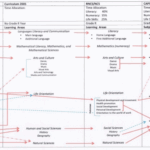
Figure 6 Comparison of subjects for the Transvaal Department of Education (1977) vs our current NCS (https://scielo.org.za/pdf/jed/n71/02.pdf )
Although we have changed our aims, we are still using a platform that, in my opinion, does not favour a vast number of children who are differently wired. It may not be too far-fetched to argue that our model has not changed much over the years, and in many instances, we are in fact emulating an imported phenomenon. However, before I try to unpack the idea, I will attempt to explain the thinking behind what might be frowned upon.
I suspect that many people who are currently operative in the mainstream public-school environment as well as those who have grown accustomed to the current school set-up as a societal institution, might be the first to find difficulty in accepting that we may need to revisit our current interpretation of education. Please note that I am by no means suggesting that we should do away with mainstream schools in their current form. We have invested a lot of energy and resources in bringing them to their current level. One could agree that Education is the road to success, but it need not be the narrow path that is currently offered by mainstream public schools. My thinking suggests that mainstream public schools do not adequately address the historical backlog and innate abilities of our township children. In an average-sized town, one could easily find 10 mainstream schools and few or no schools that prepare our children to excel in the vocational world. Instead of preparing children to follow paths that would produce skilled artisans, musicians, entrepreneurs, etc., we place such a high premium on the acquisition of a Matric Certificate to become a person with a degree or certificate that those who do not make it via the mainstream route either drop out of school and become what is labelled unemployed. In many instances, even those who achieve Matric Certificates find themselves in jobs they have not been schooled in or even unemployed.
5.2.2.2 The Master and Apprentice approach
“Tell me and I forget, teach me and I may remember, involve me and I learn.” ((Hoque, 2021)
Some scholars do not agree that Benjamin Franklin should be credited with this quote, but I am sure they would all agree that it might work in teaching and learning in school. Another aspect that might be a deterrent to adopting the “Leave no one Behind” idea would be the financial implications thereof. It might become an idle dream because there are already politicians who feel that we are spending too much on teachers. This might be a plausible argument if we consider that teachers are mainly prepared to function in mainstream schools. I am sure that many teachers are familiar with the advantages of practical work in school but in the same breath could add that this approach is not always possible in many public mainstream schools.
I wish to argue that getting our learners to the “Master and Apprentice” situation much earlier in their lives would be in the interest of our country. Maybe as soon as the FET phase of schooling. An article by Hodson and Hodson comes closest to my personal experience as a teacher for the past too many years. The subheading dealing with “learning science through apprenticeship” particularly intrigued me. (1998: 17) I was immediately reminded of ex-learners who did “appallingly” at school who later excelled in their places of employment. I can identify learners who were practically “written off” and not able to achieve satisfactory results at school, who are currently employed as experts in their fields of employment. Many assumed “non-achievers” became electricians, artisans, mechanics and managers of repute? I am so tempted to agree with Jean Lave (1988:22), that “Apprentices learn to think, argue, act, and interact in increasingly knowledgeable ways with people who do something well, by doing it with them as legitimate, peripheral participants”. (Lave as cited by Hodson & Hodson, 1998:22).
I know ex-learners who can talk the talk and walk the walk in their places of employment despite their “poor” academic performances at school, and it is with this perception in mind that I am reasonably convinced that practical involvement or experience has a major role to play in respect of conceptual understanding. More importantly, a school should be a place that prepares young people for the world of work and not necessarily to go through a 12-year-long exercise only to end up working at a place that is unrelated to the subjects they were taught in mainstream schools.
It would be more productive to introduce young people to a field of employment and related activities somewhere along their learning path. If this is spelt out in the purpose of our curriculum, it might not be a bad idea to introduce and hone skills necessary for their futures at the Senior Phase in schools. Even if children drop out of school, they certainly would have acquired some skills that could increase their chances of finding an opportunity to enhance their lives.
Regarding the purpose of education in our country, we need to ask, is it possible to equip learners, regardless of their socio-economic background, race, gender, physical or intellectual abilities, with the knowledge, skills, and values needed for self-fulfilment and meaningful participation in society as citizens of a free country? This includes providing access to higher education, facilitating the transition from educational institutions to the workplace, and ensuring employers have a comprehensive profile of a learner’s competencies. I am asking this question because at some stage we need to measure our success with reference to the purpose of education, and this, in the main, happens at the end of each academic year.
Does the report that we issue to parents reflect whether the school managed to provide evidence to parents of what a learner succeeded in fulfilling the curricular requirements as pronounced in its purpose? Is it possible that we only managed to give parents a report of how their children fared in respect of subjects like Mathematics, History, etc?
Many individuals may argue that it is possible that some of these expectations required for the CAPS are covered through subjects or in methods applied in the teaching thereof. However, I am referring to the fact that in a school context, success is measured by how well children respond to questions set on a question paper. In any other context, it could be argued that schools have not satisfactorily achieved the anticipated outcomes of the CAPS (National Curriculum Statement). It does not necessarily mean that an excellent score in any subject written, that the knowledge, skills, and values needed for self-fulfilment and meaningful participation in society have been achieved.
5.2.2.3 Decentralisation (Another lens to view township life through)
In this section, I wish to share my views on what I loosely title decentralisation. I will first talk about towns and then move to rural and village life. In 2.2 above, I alluded to a “Societal Monster” and asked whether a person who has sufficient food, proper clothes to wear and a decent house to live in would be considered poor? Could a person living in a rural area without access to television connectivity be considered less fortunate than someone living in a city? I think that there is an unspoken myth that something bigger and higher would be better for people. Here I am mainly referring to structures and services.
On 15 May 2017, I shared the following idea with an MEC whom I considered to be a friend. I am still awaiting his response (02 May 2025)
Dear Sir,
I am trying my hand at writing in my leisure time, and the following is an extract from my latest attempt. Please do me the favour of reading it and kindly let me know what you think of the idea I have attached as Appendix B.
… In essence, people need very little to be able to survive. Food, clothing and shelter.’
I have taken a keen look at how our townships are structured. The dominant mindset is that of a Western approach to an African scenario in general and a South African scenario in particular.
… In our modern South African experience, our physical location is the place where we live. Our townships are where we live, and fortunately, one of our greatest assets is our spirit of ubuntu. A very uniquely South African concept. “Umuntu, ngumuntu ngabantu”, loosely translated, this Zulu proverb means, “I am a person through people”.
The lives of our young people are not filled with examples of role models living in our streets like the ones we had in the past. Worthwhile role models tend to move out of our townships, and our kids are left with very few people to look up to.
To most township people, the best things are happening in “town” and there appears a general wish to find a place to live in town. This idea is fueled by the building of better shops and office blocks in town. The irony lies in the location of essential services needed by township dwellers in the CBD area or in “town”, meaning that already financially burdened individuals must find means to get to services that are earmarked for them.
It is against this canvas that I view the way townships are established, almost suggesting a place to sleep at night and preparing for a job somewhere else. What happens if most of the people in the township are not employed? Does it mean that we are hanging around in a space designed for sleep, or could this space transform into a place for living?
One’s very first concern would be the size of erven for RDP houses. There is no space in the yards for the cultivation of anything that would address the fundamental need for food. Perhaps one of the first considerations should be the increase in the size of Erven. Not only will it assist in alleviating a claustrophobic environment, but it could also facilitate the opportunity for self-sustenance and restoration of lost dignity.
The idea I have attached caters to the development of communities rather than building houses. It suggests the decentralisation of community services and the creation of common areas for food cultivation and stock farming.
It suggests a community owning the place where they live and working together for a better life. It would mean that the notion of unemployment would assume a different nature. Contributing to the common welfare of one’s community could hardly be classified as being unemployed. People from the community could be minding pre-school children, facilitating after-care, tending stock or cultivating food. Members of the community could keep their area clean, manage their waste in respect of recycling, etc. and generally manage community affairs themselves. A space could be created for social services to be administered in the community instead of going to the CBD. etc.
I wish that someone could consider this idea, study its feasibility and possible piloting.
In this letter, I was hoping that the two of us would start a conversation arguing that instead of locating all communities for a particular service, e.g. social services in “town”, it would be worthwhile considering decentralising such services. Bring these services closer to the communities they intend to serve. This means that instead of having 7 officials driving themselves to the CBD, rather have one official located in 7 townships.
Kindly refer to the shaded areas, which will function as decentralised service points situated within the community and minimise the number of people having to travel to town and wait in long queues.
I am still of the opinion that people living in a certain area could live together in harmony and that they could be doing things for one another. This could imply that people are not necessarily unemployed if they are not working for an employer. If retired individuals could be afforded the opportunity to be of value to a community by sharing the knowledge they acquired in their working lives, a quite different scenario would emerge. Teachers, health workers, social workers, craftsmen, athletes, farm workers, musicians, etc., could be deployed fruitfully when provided with opportunities that match their abilities. This sounds rather optimistic, but any closely knitted community could derive benefit from facilitating an Ubuntu-like society. Younger people could also share their knowledge and abilities to benefit the elderly. They could facilitate reading sessions, physical training sessions, communal dining areas, etc. These sessions need not be without remuneration and could be financed through various spheres of government or grants.
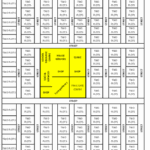
Figure 7 (Attachment B)
5.2.2.4 De-centralisation continued
If ever one finds an opportunity to travel through the erstwhile Transkei and Ciskei areas, one will be amazed by the palpable serenity and the beauty of the environment. Yet, hundreds of young people forfeit their lands and homes to go and live in slum areas in the cities. The lure of the cities could be ascribed to the lack of development in rural areas and the promise of a better life in the city.
We should consider investing in making life in rural areas more attractive through the provision of basic services, proper housing and enough arable land not only to ensure self-sustenance but also to provide much-needed food for towns and cities. In this regard, the school curriculum for schools in these areas should encourage the cultivation of crops and the keeping of livestock suited for their environment by incorporating the latest developments in micro farming.
I am very cautiously trying to tie the lives in some of our rural communities to what I wrote in 2.1.1 above, that if we acknowledge that food, clothing, and shelter are the basic needs of any human settlement, it might be expedient to consider spending more energy and resources to assist the facilitation thereof. I am using the term “cautiously” because I have experienced rural village life, and under no circumstances trying to suggest that it is of a lesser quality than life in towns and cities. It is just that I have come to respect the ways of living in these areas and the general relationship between the elderly and younger people. In many instances, some villages have been living in harmony with their environment for ages, but it is quite plausible that the mainstream public schools in these areas are creating a mindset that a European or Western way of life is the ideal. I think that attempts should be made to enhance rural settings through offering a more diverse menu in respect of education. We can assist rural communities in applying the latest technologies in farming by painting a picture that rural does not mean “backward” and that if they wish to get ahead in life, they need not migrate to towns or cities. Just a very superficial glance at the subjects available for study in the current mainstream public schools kindles the notion that to get away from a rural area would be in their best interest. We could transform villages into areas that young people would not wish to move away from, but rather places that people would visit for a variety of reasons. These could be areas that not only embrace subsistence farming but also areas that will contribute to the country’s GDP. It holds tremendous potential for tourism-related activities, and it would therefore be in the country’s interest to include the latest agricultural technologies, tourism and entrepreneurship in the curriculum of rural or so-called farm schools.
We should facilitate access to basic services, goods and health care without the people having to travel many kilometres to reach it. State doctors, nurses, and any other state service providers like police, social support and technicians that would take care of local infrastructure should be reasonably close to these communities, not only to assist rural people but also visiting tourists.
I am sure that you have an idea of what I am trying to suggest. Urban areas should not be the only passage to prosperity for rural and village areas, and we need to offer a curriculum that will cater for activities that will be in the direct interest of people residing in rural areas.
Many of these activities could be off the grid and connected to the latest internet technology in the world.
Perhaps we should earnestly become more careful of blaming the government of the day for unemployment. My humble prediction is that still more people will join the ranks of the unemployed, and we should prepare people to become less dependent on government and more reliant on self. Technological advances mean more robotically driven manufacturing and a loss of human labour. I’m almost afraid to suggest that we have become obsessed with the American Dream equated with capitalism and frown upon the African Dream of Ubuntu.
It is possible to embrace technology and live in smaller communities where people care for one another. A philosophy that every life in the community Matters can be developed despite using the latest technology. Thriving, smaller, self-sustaining societies could be created. Our focus should be on food, clothing, and shelter.
Through the encouragement of traditional practices, morals will regain the ethics upheld by our predecessors. For example, rituals that involve respect for elders and stringent processes for procreation could guide us in respect of providing secure futures for our descendants. I am painting in broad strokes, and I feel that Western standards are not completely compatible with the African way of life. I am not advocating a backwards step but rather suggest that we focus on shedding of a desire to follow western trends and rather concentrate on simple needs in smaller units by using the latest technologies without sacrificing our Africanness.
[1] Masters here is referring to artists from the community who have made their mark in local and national or even international circles.